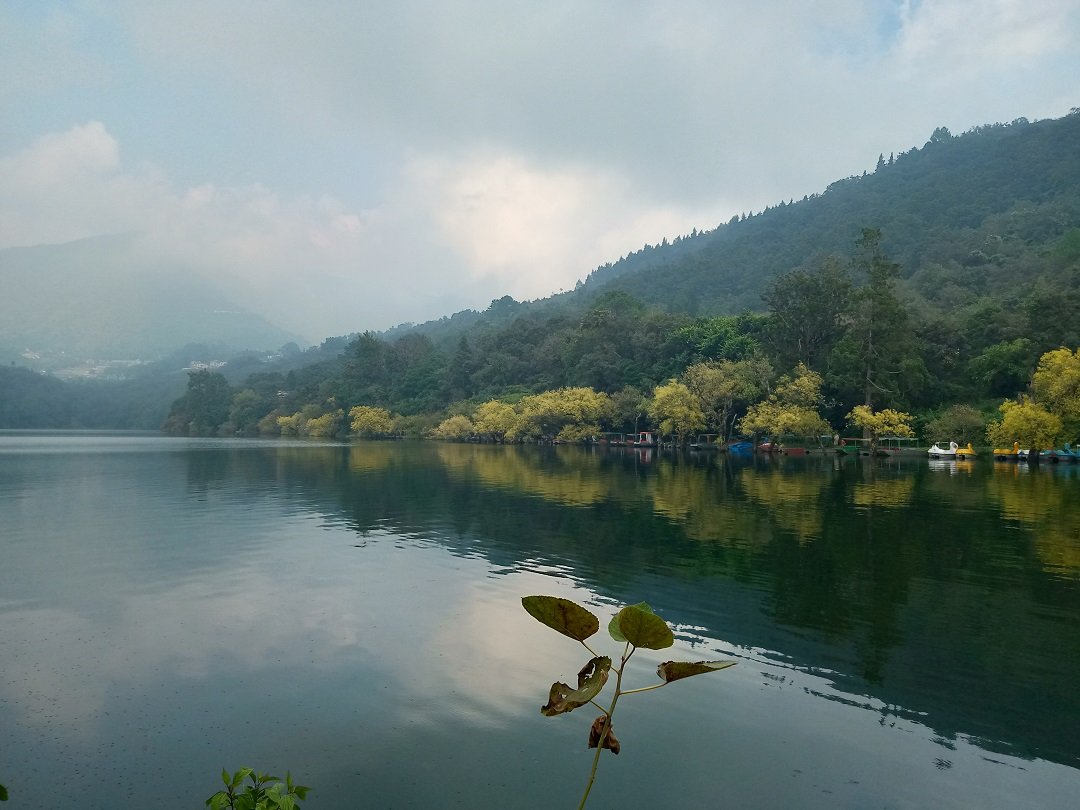

While most travelers flock to the bustling streets of Nainital, those seeking the soul of the mountains often find themselves drifting toward Sattal. Aptly named "Seven Lakes," this interconnected cluster of freshwater biomes remains one of the few unspoiled gems of Uttarakhand. It is a place where the air smells of crushed pine needles and the only traffic you’ll encounter is a flurry of bird wings.
Sattal is cradled within a dense canopy of Oak and Pine forests. These aren't just any woods; they are part of a delicate ecosystem that transitions from the moist temperate forests of the lower Himalayas to the sub-tropical pine forests.
As you walk the trails, you’ll notice the ground is a soft carpet of fallen pine cones and bryophytes. The biodiversity here is staggering. In the shadows of the giant oaks, you’ll find rare orchids, medicinal herbs, and lichens that only grow where the air is purest.
Sattal is globally recognized as a birding paradise, attracting ornithologists and photographers from across the world. The region is home to over 500 resident and migratory bird species.
Wildlife Spotlight: Keep your binoculars ready for the brilliant Red-billed Blue Magpie, the emerald-green Verditer Flycatcher, and several species of Kingfishers. If you’re lucky, you might spot the elusive Himalayan Griffon soaring above the ridges.
The Butterfly Effect: Tucked away in the Jones Estate is the Butterfly Museum, housing over 2,500 specimens. The surrounding forests are alive with rare species like the Indian Oakleaf and the massive Atlas Moth—one of the largest in the world.
Mammals: While the birds take center stage, the dense undergrowth provides cover for Barking Deer (Kakar), leopards, and wild boars.
Sattal is for the traveler who prefers a kayak paddle to a shopping mall. The lakes—including Nal-Damyanti Tal, Panna Tal, and the cluster of Ram, Laxman, and Sita Tal—offer a variety of activities.
© 2026 Hillstay. All rights reserved